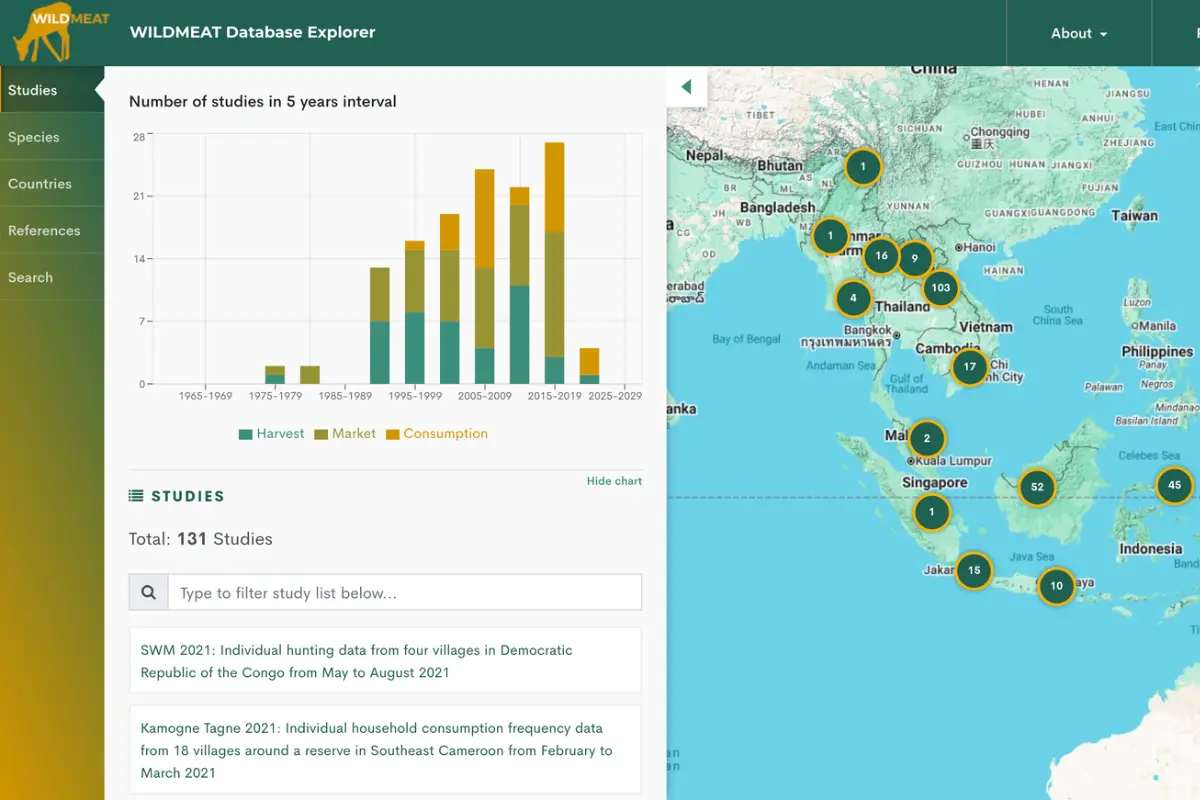
Homepage of the WILDMEAT Database Explorer
New regional data support conservation and management strategies that balance ecological sustainability with local needs.
9 Nov. 2026 — The WILDMEAT Database Explorer expanded to Asia and the Pacific today at the fourth session of the Wild Meat Dialogues webinar series, “Putting Wild Meat on the Map: Launch and live demo of the WILDMEAT platform.”
The new regional datasets bring together research from Cambodia, Indonesia, Lao People’s Democratic Republic, Malaysia, Myanmar, Thailand and Viet Nam.
Bringing regional evidence together
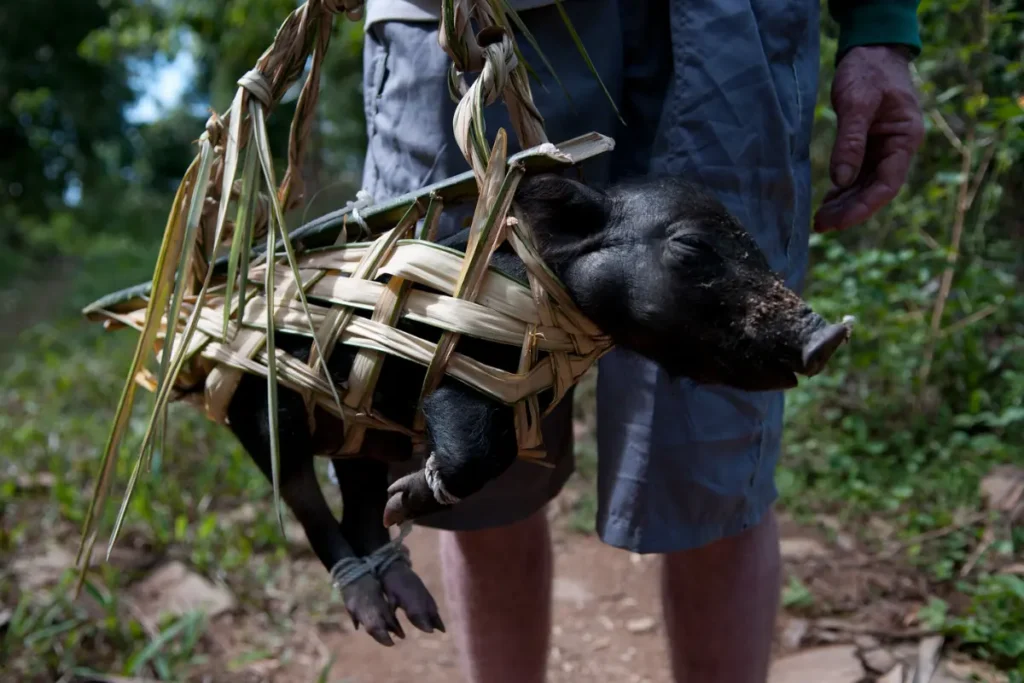
Across Asia and the Pacific, wild meat is hunted, traded and eaten in settings ranging from remote, forest-adjacent communities to urban markets and restaurants. Yet evidence on how much is hunted, by whom and where it ends up is often scarce or scattered across hundreds of studies, reports and project datasets.
This fragmented evidence makes it difficult to identify regional patterns, track changes and design evidence-informed policies and interventions. By bringing studies together in a single, standardized platform, the WILDMEAT Database Explorer helps users look beyond individual case studies to understand patterns across landscapes, countries and regions.
What is the WILDMEAT Database Explorer?
Wild meat is a key resource for millions of people. However, unsustainable hunting and wildlife trade are also leading causes of biodiversity loss and declining ecosystem health. Reliable data can help guide decisions that balance conservation with local needs.
The WILDMEAT Database Explorer is an open-access resource providing up-to-date information on:
- Wild meat hunting (offtake)
- Household and individual consumption
- Market sales
Built-in safeguards protect anonymity and support ethical data use that respects the communities and individuals behind the research. Time-series data can also help evaluate the effectiveness of wild meat management and policy interventions.
Expanding regional coverage
The Explorer began with data from Central Africa but was designed for global use. Its new Asia-Pacific module was developed through the Sustainable Wildlife Management (SWM) Programme. A further module incorporating datasets from Latin America is being developed.
Part of a wider platform
The Explorer is part of the wider wildmeat.org platform, which offers resources to support sustainable wild meat trade and consumption worldwide. These include:
- A toolkit for integrated project design, monitoring and adaptive management
Who is it for?
The Explorer supports academic and non-academic users, including:
- Researchers and academics working on wild meat and wildlife trade
- National wildlife and forestry agencies, and policymakers involved in global and regional processes through the Convention on Biological Diversity (CBD), the Convention on International Trade in Endangered Species of Wild Fauna and Flora (CITES), the Association of Southeast Asian Nations (ASEAN) and the Bay of Bengal Initiative for Multi-Sectoral Technical and Economic Cooperation (BIMSTEC)
- Civil society organisations
- Sustainable business and investment practitioners
- Potential data contributors, including universities, project teams and national monitoring programmes
“The data from this platform can be used to help answer questions about research, policy, business and more,” said Manon Mispiratceguy, Regional Wildlife Expert for Asia and the Pacific at Food and Agriculture Organization of the United Nations (FAO).
“Since the platform was first launched in Central Africa, hundreds of people have used it to pursue different goals, and we hope this new module will be a useful resource for practitioners in Asia and the Pacific.”
For example, the Biodiversity Consultancy is using the database to help clients understand and manage biodiversity risks and opportunities.
“Wildmeat.org proved to be an invaluable resource for my research on hunting in Gabon,” said Osiris Doumbe, a consultant with The Biodiversity Consultancy.
“I was able to locate relevant information quickly thanks to the platform’s clear layout and ease of use. What impressed me most was not only the wealth of information available, but also the fact that the underlying sources are clearly identified and easily accessible. This makes it very efficient to track down the original scientific publications and verify or further explore specific findings.
“It is rare to find a resource that combines such comprehensive content on the topic, strong scientific traceability, and such a user-friendly experience,” he said. “I will definitely continue using WildMeat.org for future research projects and would highly recommend it to anyone working on wildlife conservation, hunting, or related topics.”
How to use the WILDMEAT Database Explorer
Users can explore the data to address their research, monitoring or policy questions using four tools: search, filter, download, visualisation.
Find guidance
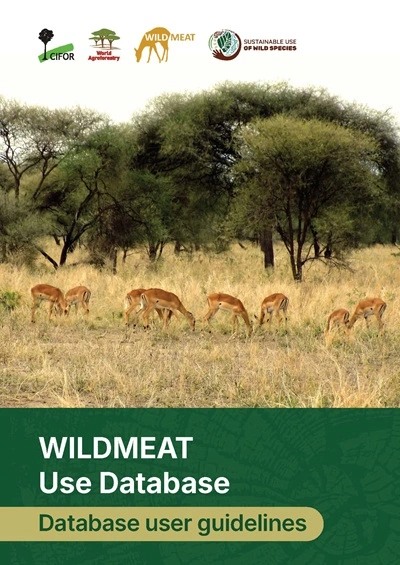
For detailed guidance, consult the Database User Guideline, which explains the data structure and codes alongside useful tips.
Contribute data
To learn about becoming a data contributor and explore data-sharing options, contact info@wildmeat.org.
Acknowledgements
Sustainable Wildlife Management (SWM) Programme
The SWM Programme is a major international initiative to improve the conservation and sustainable use of wildlife in forest, savannah and wetland ecosystems. It is funded by the European Union, with co-funding from the French Facility for Global Environment (FFEM) and the French Development Agency (AFD). Projects are being piloted and tested with governments and communities in 16 participating countries.
The initiative is coordinated by a four-partner consortium led by the Food and Agriculture Organization of the United Nations (FAO), with the Center for International Forestry Research and World Agroforestry (CIFOR-ICRAF), the French Agricultural Research Centre for International Development (CIRAD) and the Wildlife Conservation Society (WCS).
The WILDMEAT Project is a collaboration between Landscape Alliance, University of Stirling, Wildlife Conservation Society (WCS), and the Research Institute for Tropical Ecology (IRET). It is supported by the European Union (EU), the Trade, Development, and Environment Hub (TRADEHub), and, formerly, the US Fish and Wildlife Service (USFWS).